Double chin removal with Lipolysis
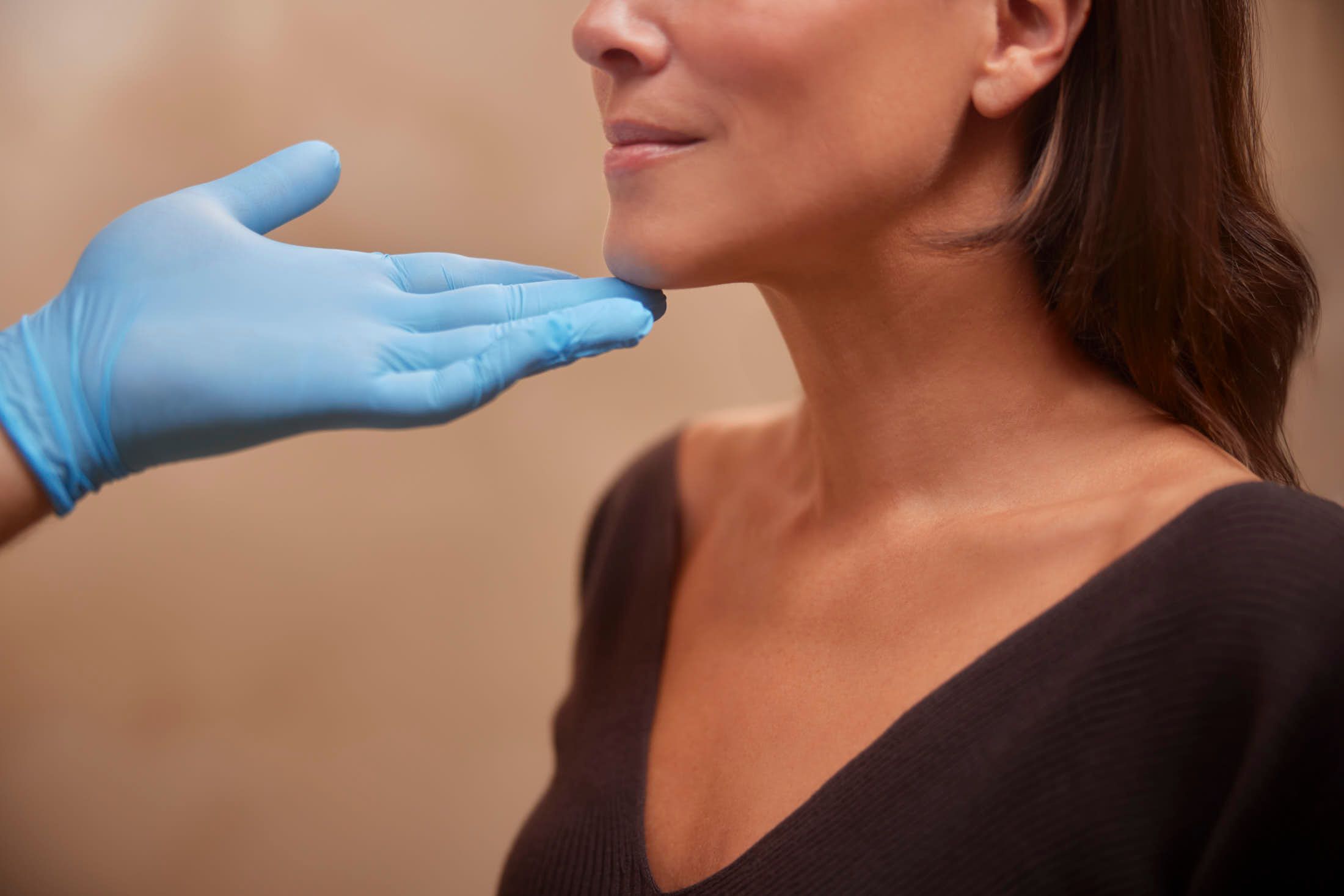
Remove double chin without surgery with Lipolysis
Lipolysis is an invasive technique to remove fat from the double chin without surgery. This treatment has the European CE mark and is also approved by the American FDA (Food and Drug Administration). Lipolysis has therefore been found to be completely safe. During the treatment, deoxycholic acid is injected into the fat accumulation of the double chin. Deoxycholic acid is naturally present in our body to dissolve fat. Research shows that Lipolysis treatment only helps with localized fat accumulation and is not suitable for overall weight loss. By injecting deoxycholic acid into the double chin, fat cells break down and are then removed via the liver. A lipolysis treatment is performed under local anesthesia, and the first results can be seen after about two weeks. In total, you will need approximately 3-4 treatments.
History of Lipolysis
The use of an injection to reduce localized fat began around the 1960s to treat or prevent a fat embolism. Subsequently, Dr. Sergio Maggiori showed satisfactory results at a mesotherapy congress in Paris in the late 1980s. In 1995, the Brazilian dermatologist, Dr. Patricia Rittes, treated her own lower eyelid fat with an injection that locally dissolved the fat. In 2003, 'Network Lipolysis' was founded in Germany, and European research into the scientific background of this new treatment variant in aesthetic medicine began. Today, the use of deoxycholic acid for the reduction of fat in the double chin is approved by the American Food and Drug Administration (source: Phosphatidylcholine treatment to induce lipolysis [1].
Various Fat-Dissolving Substances
There are several crucial substances in our body that can cause fat to dissolve. The most important are:
- Phosphatidylcholine. This is an essential structural component of cell membranes. In addition, phosphatidylcholine is important for fat metabolism and the removal of fats from the liver. This substance breaks fat into mini particles, making fat transport possible.
- Deoxycholic acid. This is a component of human bile acid. This substance plays a vital role in the emulsification and digestion of fat in the intestine (source: Fat Busters: Lipolysis for Face and Neck [2]). Research by Rotunda and colleagues [3] showed that when deoxycholic acid is developed externally, it causes cell death, and relatively protein-poor tissue such as fat is more susceptible to cell destruction than relatively protein-rich tissues such as skin and muscles. The clinical efficacy and safety of deoxycholic acid have been established in multiple studies.
Several combinations of the above substances have been tried. However, deoxycholic acid appears to be the active component when it comes to destroying fat cells (source: https://www.rivm.nl/publicaties/adipocytolyse-door-subacute-injectie-van-lipostabil-literatuurstudie [4]). Ultimately, the first deoxycholic acid injection of the brand Kybella was approved in 2015 as a medicine for reducing fat in the double chin (source: deoxycholic acid injection: a nonsurgical approach for reduction of submental fat [5]).
Lipolysis Causes an Inflammatory Reaction
When you undergo a lipolysis treatment, the cell wall of the adipocytes is destroyed. Adipocytes, also called lipocytes or fat cells, are the cells that largely form adipose tissue. The injection with deoxycholic acid creates an inflammatory reaction, causing the adipocytes to decrease in volume. In addition, the inflammatory reaction leads to the formation of connective tissue, which results in collagen production. This tightens the skin. The treated area may feel red and warm due to the inflammatory reaction (source: Tissue-selective effects of injected deoxycholate [6]).
Preparation for Lipolysis
To ensure that only the fat accumulation is treated with deoxycholic acid, it is important to precisely determine where the fat is located in the double chin. The skin and muscle tissue around the fat must not be affected (source: Tissue-selective effects of injected deoxycholate [6]). The doctor will ask you to tense your neck muscles by moving your jaw down. The fat is located in front of this muscle, and by tensing, the doctor can precisely see and feel where the fat accumulation is. Subsequently, the area is marked, and the injection points are placed as a grid on the double chin. Each injection point is 1 cm apart. You will receive multiple injections during the lipolysis treatment (source: Fat Busters: Lipolysis for Face and Neck [2]).
Application of a Lipolysis Injection
- A 1ml syringe with a thin needle is used.
- Before photos are taken.
- The area is marked, and injection points are placed on the skin.
- No anesthesia is used, unless specifically requested.
- Per treatment, 3-5ml of deoxycholic acid is injected, distributed over the different injection points.
- The doctor can grasp the excess fat of the double chin during the treatment to ensure the correct depth. The injection is placed approximately 6-10mm deep.
- Approximately 3-5 treatments are needed to achieve the desired result. Of course, this depends on the amount of fat in the double chin.
- After the treatment, you will experience discomfort for 2 days to 2 weeks.
- The result is gradually visible; after about 2 weeks, the result can be seen.
After Lipolysis Treatment
Deoxycholic acid causes an inflammatory reaction in the double chin. This can lead to swelling and redness. Please note that this can last for 2 days to 2 weeks. Your body is working to destroy the fat. These discomforts can be treated by cooling. When you undergo a Lipolysis treatment, you are injected with deoxycholic acid. This method of fat cell destruction appears to be effective only for localized fat accumulations such as the double chin. It is important that the exact location of the fat is accurately determined during the treatment. In this way, only the fat tissue can be treated, and the surrounding skin and muscle tissue will be spared. When Lipolysis is applied to the double chin, this treatment has been found to be completely safe by both the European CE and the American FDA.
References
[1] Hasengschwandtner F. (2005). Phosphatidylcholine treatment to induce lipolysis. J Cosmet Dermatol, 13:308–13. [2] Talathi, A. & Talathi, P. (2018). Fat Busters: Lipolysis for Face and Neck. J Cutan Aesthet Surg, 11(2): 67–72. [3] Rotunda A, Suzuki H, Moy RL, Kolodney MS. (2004) Detergent effects of sodium deoxycholate are a major feature of an injectable phosphatidylcholine formulation used for localized fat dissolution. Dermatol Surg, 13, 1001–8. [4] https://www.rivm.nl/publicaties/adipocytolyse-door-subacute-injectie-van-lipostabil-literatuurstudie [5] Dayan SH, Humphrey S, Jones DH, Lizzul PF, Gross TM, Stauffer K, et al. Overview of ATX-101 (deoxycholic acid injection): a nonsurgical approach for reduction of submental fat. Dermatol Surg. 2016;13:S263–70. [6] Thuangtong R, Bentow JJ, Knopp K, Mahmood NA, David NE, Kolodney MS. Tissue-selective effects of injected deoxycholate. Dermatol Surg 2010; 36(6):899-908.

After studying Medicine at the University of Leuven (2015), Hugo further specialized in plastic surgery in the hospitals of Apeldoorn and Nijmegen. Cosmetic surgery, in particular, caught his attention – he is especially drawn to goal-oriented and practical action. Hugo has extensive experience with injectable treatments (more than 5,000 treatments) and specializes in upper eyelid correction (more than 1,500 operations). **Fresh and natural – without it being noticeable** "The combination of minor surgery and injectable treatments makes cosmetic medicine a wonderful profession where small procedures can make someone feel fresh and revitalized again. I listen to my clients' wishes but always maintain an overview of the overall picture – so that the face remains balanced. Because it's not about perfecting one zone, but about creating harmony throughout the entire face. Together we look at how we can achieve the most natural refreshment possible without it being obvious. My goal? That you look fresh without your surroundings realizing a treatment has taken place. That, for me, is the sign of a successful treatment." **Background & specialization** With his background in plastic surgery and his specialization in cosmetic procedures, Hugo combines surgical precision with an artistic eye for balance and harmony. His experience of more than 5,000 injectable treatments and 1,500 upper eyelid corrections makes him a versatile specialist within cosmetic medicine.
Related articles



Jul 4, 2025


Nov 22, 2024