Sophie Hilbrand and Halina Reijn on botox
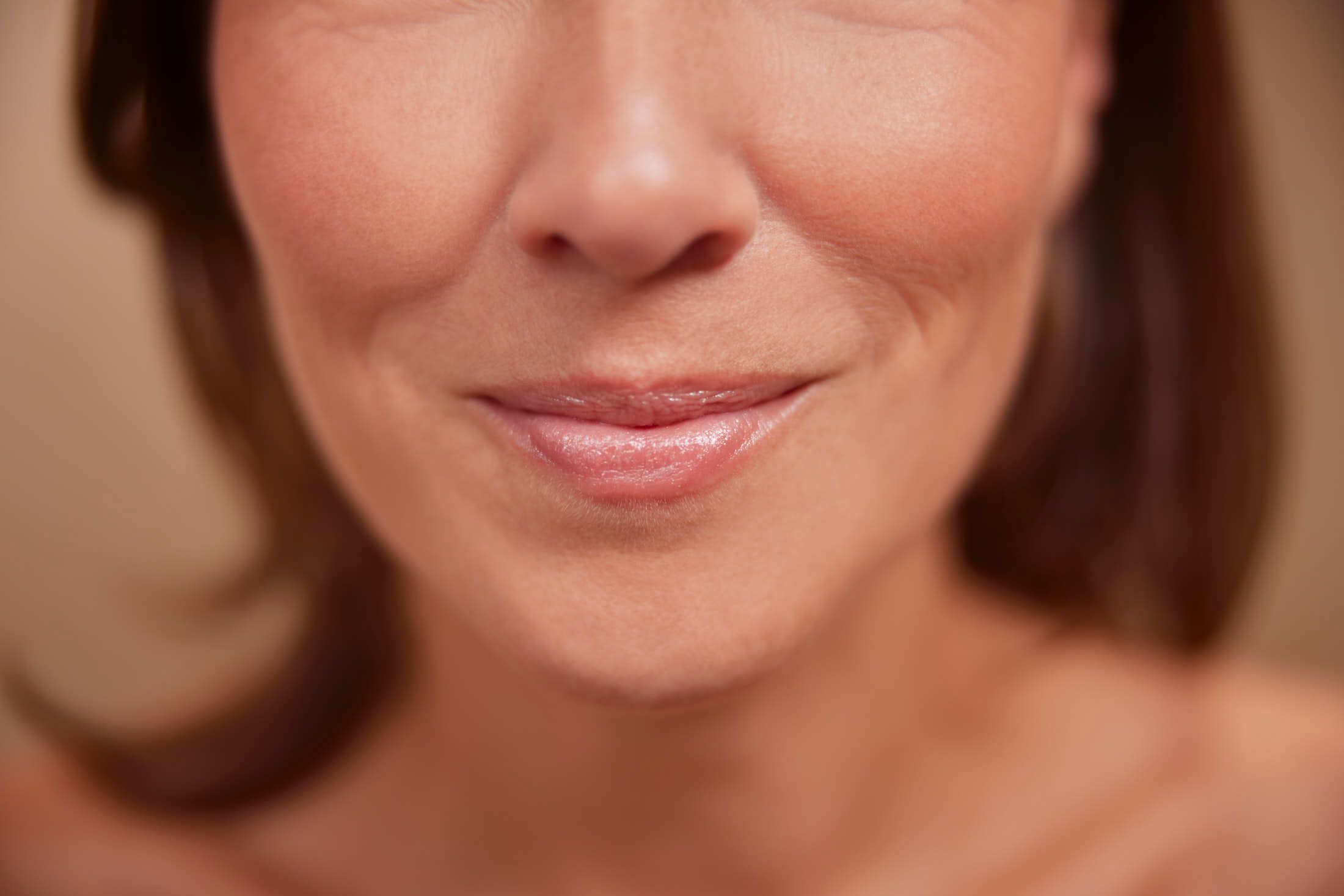
Staying young, being beautiful, and remaining true to yourself: these are themes that increasingly clash. In this candid conversation, Sophie Hilbrand and Halina Reijn discuss the pressure of the beauty ideal, the taboo surrounding botox, and the question of whether cosmetic choices reflect freedom or societal compulsion.
Botox, isn't that a sight?
Sophie Hilbrand (39) & Halina Reijn (39)
INTERVIEW
How far do you go to stay young? Sophie Hilbrand investigates this in her new program Sophie in de Kreukels. For the two-part V-botox special, she engages in a discussion with actress Halina Reijn, who celebrates life with botox.
Sophie Hilbrand (39) and Halina Reijn (39) both earn their living in the spotlight. And in a sector where it's not unusual to tweak your appearance. Halina indeed reached for the syringe, Sophie grabbed the camera to highlight the beauty cult. A conversation about the psychology of appearance, the pressure of the beauty ideal, and the taboo surrounding botox.

© Cornelie Tollens
Halina, take a good look at Sophie. What do you think bothers her when she looks in the mirror?
'Oh, I really don't know. You have a beautiful face, Sophie! So symmetrical, soft, and sexy. But maybe you find those wrinkles above your eyes annoying?'
Sophie: 'It varies quite a bit. When I had a half burnout and looked at my face, I often wondered if it would ever get better. My entire radiance was gone. I was also on holiday with a cosmetic doctor and exclaimed: holy fuck dude, is there anything so I can ever return? And now, when I look at myself, in the reflection of the car window for example, I see quite a lot of lines that aren't there in my mind. But that doesn't keep me awake at night, you know. I find it funny to notice how difficult this question is. I also encountered it in my program: it's very subjective how everyone experiences their appearance.'
What do you think bothers Halina?
'Um... Maybe she can be a bit tired under her eyes?'
Halina: 'Huh what? Tired under my eyes?! Haha. No, what bothers me more is that I can have a very intense look. My ideal image is a blank canvas-like sweety peachy face, but sometimes I see a strange shrew. I really find that harsh aspect of my face difficult at times. I have an eternal fetish for being girlish.'
The child-woman.
Halina: 'Yes. I wanted that when I was 4; I preferred to only wear schoolgirl dresses.'
Sophie: 'That was totally different for me. My mother really had to speak to me sternly if she wanted me to comb my hair at least once a week. I didn't mind walking around with a bird's nest on my head.'
You eventually had botox, Halina. Which flaw did you address first?
'This here (points to the line between nose and corner of the mouth, ed.) I've had a groove there since I was 20. I had it filled. And I immediately found that very beautiful. My face softened right away.'
Do you already have a treatment on your wishlist, Sophie?
'Not at the moment, no. But it is a topic that fascinates me. Why does one person suffer from a small imperfection while another, who much less meets the classical beauty ideal, feels perfectly fine? Why does the world go up in flames when we suspect someone has had something done? While botox is already much more widespread than I thought. That brings me back to the question of what it will do to the beauty ideal and to the world.'
Halina, when you were in the treatment chair, did you still have any objections, for example, that it didn't fit your worldview?
'Yes, very much so. I also had to think of my mother, who raised me perhaps like Sophie: appearance is of no importance whatsoever. It doesn't matter if you have long armpit hair or if your breasts sag, because you are unique and you are allowed to be here.'
How did you then decide to get botox?
Halina: 'Uh, because it was also somewhat subtly suggested to me. Not in the theater world, by the way, but in the film world, a director once hinted at it. Not literally, but it was said: 'You act very well, only you have a bit of a harsh face compared to others.' They found that a pity and would have preferred to graft my talent onto someone with a Romy Schneider-like face. Well, I never thought my career was hampered by it - I always believed in my talent - but I noticed that I also found it difficult that my face limited me. Ultimately, I didn't do it to please that director, you know. I was raised too lovingly for that. If you have a void to fill from deep-seated insecurity and you think you can compensate for that with large breasts or all sorts of procedures, that's different. Then the risk of going overboard is greater, just like with any addiction. Someone else snorts cocaine because they are too insecure. But that wasn't the case for me.'
Why did you do it then?
I can enjoy it. Just as I can immensely enjoy buying a lot of makeup, or a Rolex, or an excessively expensive dress. I'm also ashamed of it, because I understand how ridiculous that is, and yet it makes me happy.
Halina: 'For myself. I just really like it, I can enjoy it. Just as I can immensely enjoy buying a lot of makeup, or a Rolex, or an excessively expensive dress. I'm also ashamed of it, because I understand how ridiculous that is - and yet it makes me happy.'
Sophie: 'It's funny you say that. For my program, I spoke with clinical psychologist Liesbeth Woertman, who says that people who undergo cosmetic procedures often say they do it for themselves, but that's not really the case. Your appearance is, by definition, related to what others think of you. On your own, your appearance doesn't matter.' Halina: 'Of course, it's all perception. But that doesn't mean you shouldn't do it. It's just a Calvinistic, biblical, outdated notion that you shouldn't do that. I find that sad. If in my free time I buy a fabulous dress or just before a performance apply a generous amount of La Prairie cream to my face because I can afford it, that won't affect my core. The same applies to botox. I see no harm in it. I see it as celebrating life.' Sophie: 'I'm not judging you, mind you. But I also notice that both you and all those clinics talk very easily about wrinkles that can just be removed. The focus is increasingly shifting to appearance. And when I think of my little daughter, I don't find that a pleasant development at all. My daughter recently asked me: 'Do I have wrinkles too?' She really wanted them. I thought: I hope that stays that way. I hope you want them!'
Honestly, I have trouble with Yolanthe who throws it onto a completely different topic, while I think: Jesus, lord, just admit it. What's so bad about it?
Halina: 'Yes, I understand that. I also find it terrible that more and more 18-year-old girls are getting lip augmentation. In a utopian, non-dualistic world, appearance wouldn't be an issue. But we don't live in Efteling, we live in reality. And I don't think that because of such excesses, I shouldn't use botox to soften my face. If I had a daughter, I would have an honest conversation about my considerations. I don't believe in desperately trying to be an example of something your daughter will never achieve. Because you already know she will never say: 'Mom, I have saggy breasts, nipple hair, forty million wrinkles, and a tree growing out of my calf, but I think it's fantastic!' I am also sensitive to the fact that we women must be young, beautiful, and sexy. I'm not a rock! We are all susceptible to that. Unless you are enlightened and in a monastery. But I am not.
'What I find much worse are all the women who lie. I truly find that terrible! That's why I think it's fantastic that Sophie makes a program about it and shows all sides. Honestly, I have trouble with Yolanthe (Sneijder-Cabau, ed.) who throws it onto a completely different topic, while I think: Jesus, lord, just admit it. What's so bad about it? There's still a taboo and shame. I also hesitated, you know, to do this interview. Because I already know that this will be topic number 1 in all subsequent conversations. I think this is a socially important theme, so we must talk about it, but it still requires courage to say what I say.' Sophie: 'Yes, agreed.'
How do you explain that taboo?

Sophie: 'There's always a chance you'll be judged for it, of course; some people will think less of you if you use botox. Because by tweaking your appearance, you indicate that you care about what other people think of you. And we don't think that's cool.'
Halina: 'No, you're not allowed to be vain. Dutch people love the girl next door who, with thick calves on a cargo bike, lets her hair be blown dry by the wind. I hate all that fuss. I hate taboos. That's what I find vain. My great example in this is Lena Dunham. She shows her full body, but at the same time doesn't hide her urge to be thin. She says: I find it terrible and hate myself, but on another day I find myself hot again. I'm also insecure. I can sit at DWDD and think: my goodness, how do I look! And at another moment I celebrate myself and give myself botox as a gift. Only to then crawl across the floor with all my cellulite during a performance. I just like being a wild, ugly cave dweller on one hand and a little princess on the other. That duality exists in everything on this earth, and we must show it. I no longer remember who Ronald and who Frank de Boer is, but you have that one and the other, and I was recently with a group of people around that one when he simply said he had had his frown line done. I find that amusing.'
Sophie: 'I'm still surprised that a former football player like Ronald de Boer does that. And I can't help but think that he suddenly started doubting his frown because he got a much younger girlfriend whose father is a cosmetic doctor.'
Halina: 'But isn't that what you're making of it? I think it's great that he just does it and has the courage to talk about it. In fact, he's admitting he's quite insecure. How many men do that? I think that's much more powerful than all those people who are ashamed of themselves. Or who look at life from the dogma of conventionality. I can get really angry about that. Dutch people, I really hate them sometimes. What does it matter if Ronald de Boer does something, even if he gets tusks! Who the fuck cares? Live! I also feel a kind of jealousy in that. Actually a kind of self-hatred, projected onto other women. And I find that awful. Give each other, grant each other.'
Dutch people, I really hate them sometimes. What does it matter if Ronald de Boer does something, even if he gets tusks! Who the fuck cares? Live!
Sophie: 'Sometimes I also think I'm hopelessly old-fashioned. I don't tweet and I'm not really good with all that other technology either. Now again with the cosmetic industry. Maybe I'm an arch-conservative who says: well, well, what's happening in the world?'
Halina: 'You find a kind of Ronja the Robber's Daughter pure and beautiful - and that's fine - but if you talk sneeringly about 'that Ronald de Boer', I don't like that judgment. Of course, it's terrible that we live in a culture where we think we just have to be young. And of course, there's a lot to be said about the image of women and how we are viewed. But I also see it as the new feminism. We wear high heels, get botox, but we do what we want. I don't think feminism means I have to go through life in overalls, long armpit hair, and unbotoxed.' Sophie: 'Do you, for example, also consider someone like Beyoncé a feminist? I'll probably sound like an old Nokia again, but when I see all those clips, also with Nicki Minaj and Jennifer Lopez, I think: this is some kind of ass competition. If you call yourself a feminist, while you're just trying to be the hottest woman, I think you've missed the point somewhere.'
You mainly feel the freedom, I feel the pressure of the industry rattling at your door
Sophie
Halina: 'I think your judgment says a lot about your sexuality and your acceptance of your own femininity. I truly believe that, if we're having an honest conversation. I think someone like Beyoncé makes a very important statement. Namely, that you're allowed to be incredibly sexy, that you're almost allowed to be a whore.'
Sophie: 'That you 'must' be sexy.' Halina: 'That's your perception! We don't all have to sit on the couch in a sweater and jeans, do we?' Sophie: 'It's the same with botox. You mainly feel the freedom, I feel the pressure of the industry rattling at your door. My mother hardly cared about her appearance because she couldn't do anything about it anyway. That's different now. And so things are talked into you. I was at a fair in Monaco and kept hearing: 'You don't want those wrinkles, of course, so we have this for you...' Then I think: you don't want those wrinkles, of course? Who says that?'
Do you see many botox users in your environment going overboard?
Sophie: 'Yes, I'm not going to name names.'
Halina: 'I see it in my surroundings too. Then I say something about it, I'm very blunt about that.' Has anything else been added for you after that first treatment?
Halina: 'Yes, a little bit of botox in the wrinkles on my forehead. Because sometimes I find my expression on stage too much. But of course, I mustn't go overboard; if I were to become an expressionless woman, I would lose my income.'
Has botox actually yielded anything for you? For example, has it increased your popularity among men?
Halina: 'Oh no, certainly not. I'm also no longer praised for my appearance at all, rather less. If you're often on television, you're criticized all day long. And as we discussed at the beginning of the interview: men look at your appearance very differently. I once had to become very thin for a role and then very fat again. Well, I've never had so much charm as in those few months I was fat. While all women were obsessed with me when I was so thin. Even my mother asked what diet I was on. My then-boyfriend found that thinness very intense, he just found those bones disgusting. The heterosexual men I encounter are simply against artificial enhancements. I recently had my hair extended for a performance, and if a man runs his hand through my hair and feels those attachment braids, he finds that awful. Men really have nothing for fake. Some also say that I shouldn't talk about my botox use. You're never allowed to do that again, they say. You have to be some kind of virgin. I really find that sexism. Nonsense, bullshit.'
Are injectables a boost for your happiness?
Halina: 'No, I'm not an idiot. Nothing is a boost for happiness, except the connection you have with yourself. Everything around you can fall away, even your limbs, and even then you can experience happiness if you have a good connection with your heart. For the rest, everything is a game, and you can try anything. And most importantly, don't judge too harshly.'
Source: De Volkskrant, By: Nathalie Huigsloot, August 31, 2015, 21:00
Sophie in de Kreukels can be seen every Tuesday from tonight at 9:35 PM on BNN/VARA on NPO 3
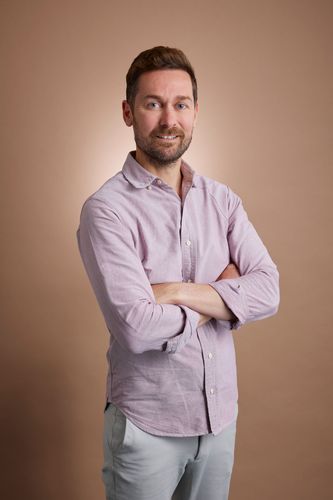
Bart Biermans is a cosmetic doctor and founder of The Body Clinic. After studying medicine at Utrecht University, he started one clinic in Amsterdam, which under his leadership has grown into a leading organization with multiple locations in the Netherlands and Germany. With over 20 years of experience in injectables, Bart has developed a clear vision on natural aesthetics, balance, and harmony. Although Bart now only sporadically treats patients, he plays an important role in coaching the doctors within The Body Clinic. He transfers his years of experience by guiding doctors in the same refined working method he developed himself: subtle improvements that suit a person's face, without it being visible that a treatment has taken place. Bart encourages his team to work with small, thoughtful adjustments and to prefer a refined follow-up rather than doing too much at once. In this way, he safeguards natural aesthetics and the preservation of facial expressions as core values within the entire organization. In addition, as director, Bart is closely involved in medical quality, strategic choices, and the further growth of The Body Clinic. His vision on meticulousness, natural results, and realistic aesthetics continues to form the basis of how the clinic operates and grows to this day.
Related articles

Jul 4, 2025

Dec 13, 2024