
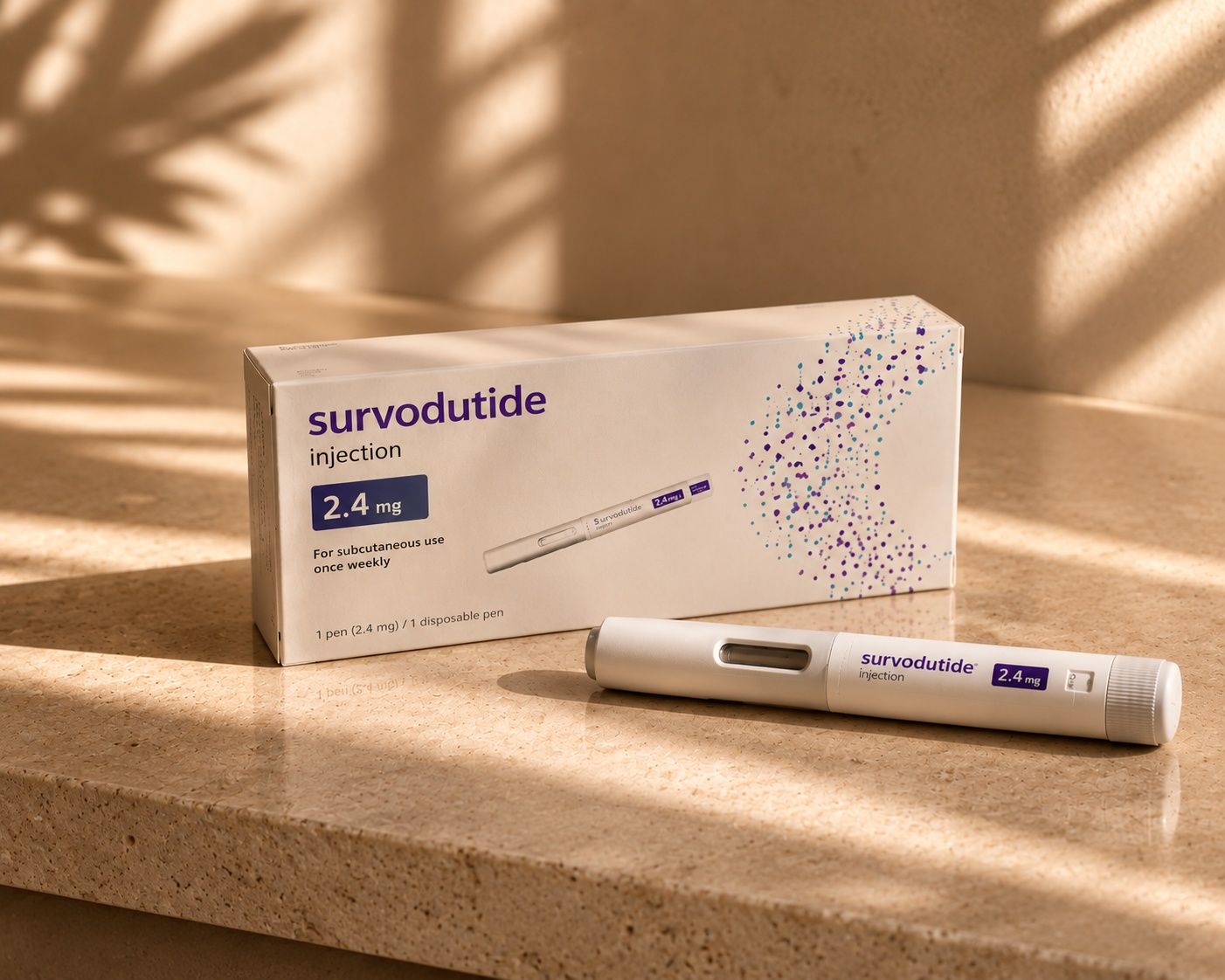
What is Survodutide?
Survodutide is an experimental drug that affects two receptors in the body: the glucagon and GLP-1 receptors. These receptors play an important role in metabolism and appetite regulation. Because Survodutide simultaneously activates both receptors, research is being conducted into whether it can help to reduce hunger and burn more energy. This could potentially support weight loss. The initial research results show positive effects on both weight loss and metabolism. For example, patients with type II diabetes or obesity lost an average of 14.9% of their body weight after 46 weeks of medication.
Differences between Survodutide, Tirzepatide, and Semaglutide
The main difference between Survodutide, Tirzepatide (Mounjaro), and Semaglutide (Wegovy) lies in their mechanism of action.
- Semaglutide (Wegovy) activates one receptor: GLP-1.
- Survodutide activates two receptors: GLP-1 and glucagon.
- Tirzepatide (Mounjaro) activates two receptors: GLP-1 and GIP.
What these medications have in common is that they all help to reduce appetite and regulate blood sugar levels. Additionally, both Tirzepatide and Survodutide stimulate energy expenditure, which may contribute to additional weight loss. Tirzepatide also has an effect on fat burning.
Research into MASH
In addition to its potential role in weight loss, Survodutide is also being investigated as a treatment for metabolic dysfunction-associated steatohepatitis (MASH), a serious liver condition often found in people with obesity and diabetes. In a phase II study, 83% of the investigated patients showed a possible improvement in their liver health. This suggests that the drug could potentially have broader applications, but further research is necessary to confirm these findings.
Survodutide is still in the research phase and has not yet been approved for general use. Further studies will have to determine if and when this drug will become available to patients.