Side effects of fillers
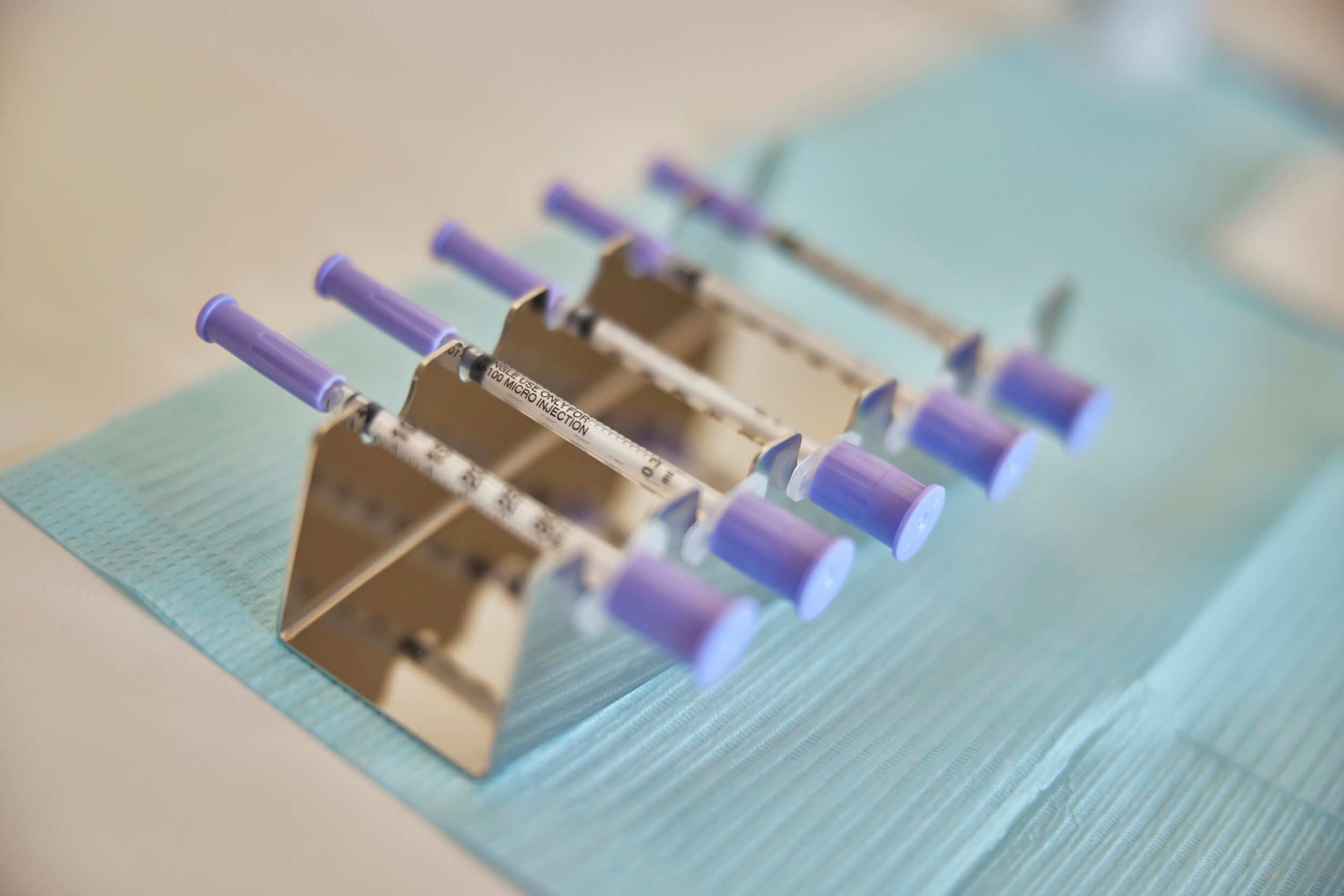
A filler treatment generally carries very few risks, but a side effect can occur. In the article below, we discuss possible side effects of filler treatments and I want to give you some more background information about filler treatments in general.
Side effects of a filler treatment
Common side effects of a filler treatment include:
- bruising,
- fluid retention (edema),
- skin redness (erythema),
- pain,
- itching or stiffness of the treated area.
These side effects can occur immediately, but are often short-lived and easily treatable. Vaccines (for example, Moderna's Coronavirus vaccine) can also cause redness and swelling in areas where a filler has been injected, as a vaccine activates the immune system.
Bruising
It is possible that after a treatment with fillers or Botox, you may experience some swelling or bruising. Treat your skin with Arnica drops before the treatment to prevent bruising.
Fluid Retention (Edema)
A filler attracts moisture, which can lead to edema (fluid accumulation). If this occurs, we advise gently cooling the edematous area and softly massaging it with fingertips or a roller; this can effectively help the fluid disappear. For persistent swelling, your doctor can dissolve the excess filler with hyaluronidase.
Red Skin Discoloration (Erythema)
Erythema means redness in Greek. After a filler treatment, temporary erythema (redness of the skin) is a common side effect. The redness of the skin usually subsides on its own. If the redness persists for longer than 24 hours, there may be a circulatory problem. It could be that a filler is pressing on a vein and blocking blood flow. It is important to consult your doctor quickly if this indication occurs.
A Vaccine in Combination with Fillers Can Cause Redness and Swelling
Redness and swelling of the skin can occur if you have been vaccinated shortly before or after a filler treatment. The immune system is activated by vaccination, which creates a small chance that the immune system will also attack endogenous substances. Although hyaluronic acid is an endogenous substance, in exceptional cases, it can still be attacked by your immune system. These effects have also been observed with the Coronavirus vaccine from pharmaceutical companies Moderna and BioNTech/Pfizer. More on fillers and the Coronavirus vaccine below. (source: Eckart (2015) “Managing Complications of Fillers: Rare and Not-So-Rare” [1]. Eckart states that these side effects are a normal reaction of the body to the injection of a foreign substance. The short-term side effects can be treated almost immediately by cooling, and bruising can be reduced by using Arnica drops.
Fillers and the Moderna and BioNTech/Pfizer Coronavirus Vaccine
In the recent period during which vaccination began in America, the Food and Drug Administration (FDA) received several reports from doctors who saw patients developing swelling and Erythema (redness) on their lips and cheekbones where fillrs had previously been injected. This reaction occurred after vaccination with the Moderna Coronavirus vaccine. Among over 15,000 vaccinated individuals, this side effect was observed in three patients. It is important to note that all three patients recovered completely and without problems.
In addition to Moderna's Coronavirus vaccine, side effects have also been reported with the BioNTech/Pfizer vaccine. The safety committee (Prac) of the European Medicines Agency (EMA) states that there is 'at least a reasonable possibility of a causal link' between the BioNTech/Pfizer vaccine and cases of facial swelling in areas where a filler treatment had recently been performed.
Such a reaction to a vaccination is nothing new. The immune system has simply become (temporarily) more active and turns against the filler; this can also happen with other infections. This does not mean that you should not take these side effects seriously. The advice from The Body Clinic is to avoid undergoing filler treatments in the two weeks before and after vaccination with the Moderna and BioNTech/Pfizer Coronavirus vaccine. This significantly reduces the chance of experiencing side effects.
Other Side Effects of Fillers
After treatment with a hyaluronic acid filler, side effects can also occur only after two weeks. Eckart (2015) states in her research “Managing Complications of Fillers: Rare and Not-So-Rare” [1] that a large part of these side effects can be prevented.
Allergic Reaction
An allergic reaction is rare and can occur either immediately or after about two weeks. A preliminary examination can prevent a possible allergic reaction.
Infection or Inflammation
An infection can be prevented by thoroughly disinfecting and degreasing the treated area. Also, no makeup should be present on the area to be injected. An infection must be treated with antibiotics almost immediately.
Tyndall Effect
The Tyndall effect means that the filler shimmers through your skin with a bluish color. According to research by Luebberding & Alexiades-Armenakas (2013) [2], the Tyndall effect can occur when the filler is placed too superficially or in clients with thin skin and minimal collagen support.
Granuloma
A granuloma is a very rare type of nodule and is virtually unpredictable. This nodule can often be massaged away or dissolved.
Fillers are popular
Fillers are among the most popular cosmetic treatments in the Netherlands, and we see this reflected in our clinic. We perform approximately as many filler treatments as Botox treatments. This is not surprising, of course, because a filler treatment yields beautiful results.
Most fillers are based on [hyaluronic acid]/products/hyaluronic-acid/), a transparent, body-identical gel. This gel is injected under the skin mainly for cosmetic and sometimes medical purposes. This can be, for example, to maintain the natural contours of your face, to counteract visible effects of aging, or to add volume to certain areas.
Fillers in numbers
Below are some interesting figures demonstrating the popularity of fillers (“Numbers on injectable treatments in the Netherlands in 2016” [3]):
- in 2016, over 140,000 filler treatments were performed in the Netherlands.
- 1 in 49 women in the Netherlands has been treated with a filler.
The taboo surrounding filler treatments thus seems to be diminishing, although we regularly receive questions about the safety of fillers in the clinic.
What to look out for with a filler treatment
Prevention is always better than cure. Therefore, pay attention to the following points when undergoing treatment:
Experienced and certified doctor
It is important that you are treated by an experienced and certified doctor. Ensure that your doctor is BIG registered, preferably NVCG certified (Dutch Society of Cosmetic Medicine) and affiliated with the KNMG medical association.
A-brand filler
Besides a competent doctor, you must ensure that the best product is used. Make sure that the clinic you choose uses A-brand fillers, as tens of millions of treatments have been performed with them, and their safety has been proven. Most clinics offer clients a free consultation where you can ask all your questions; make use of that.
Listen to the recommendations
Naturally, it is also highly recommended to follow the doctor's recommendations before and after your treatment.
What to do before a Filler treatment
Arnica drops
To prevent bruising, you can start with Arnica drops (10 drops, 3 times a day) for 5 days before until 2 days after the treatment.
Stop supplements
Stop all food supplements, vitamins, and fish oil 5 days before your treatment.
No alcohol
Do not drink alcohol 48 hours before the treatment.
No blood thinners
Do not use blood-thinning medications such as Aspirin, Naproxen, Ibuprofen (use Paracetamol if necessary).
No Vaccination
We advise you not to undergo a Filler treatment in the 2 weeks before the Moderna COVID vaccination.
What to do after a Filler treatment
Cooling
Immediately after the filler treatment, cool the treated area for 10-30 minutes.
No sports
Do not exercise on the same day.
Avoid contact with injected skin
Avoid touching the injected skin.
Stay out of the sun
Avoid sun exposure to the treated area for the first week. Use a daily sunblock / at least SPF 30.
No sauna or tanning bed
Do not use a sauna or tanning bed for the first week.
No other treatments for 2 weeks
For the first 2 weeks, you may not undergo any treatments from a beautician in the treated area, such as peeling, laser, microdermabrasion, scrubbing, or other facial skincare treatments.
No Vaccination
We advise you not to undergo a Filler treatment in the 2 weeks after the Moderna COVID vaccination.
Permanent fillers
We broadly distinguish between two types of fillers: permanent and temporary fillers. Permanent fillers are often irreversible. Permanent fillers are made from non-biodegradable materials and are not absorbed by the body after injection. As a result, the filler always remains in the body and is therefore permanent. The use of permanent fillers for beauty reasons has been banned in the Netherlands by the RIVM since 2015. An exception to this is the use of permanent fillers to repair damage, for example, caused by an accident. This is called reconstructive application.
Temporary Fillers
Temporary fillers are often made from a substance naturally occurring in the body. These fillers are absorbed by the body and therefore remain in the body only temporarily. How long these fillers actually remain in the body depends on:
- the type of filler,
- the treatment area,
- the injection technique,
- and the amount injected.
The effect varies from approximately three months to two years, during which the filler is absorbed by the body. (source “Critical Appraisal of the Safety of Dermal Fillers: A Primer for Clinicians” (2013) [2].
A temporary filler can be dissolved in the interim
A temporary filler disappears from your body over time, but if you are not satisfied with the result, a temporary filler, unlike a permanent filler, can be dissolved with hyaluronidase. Through an injection, hyaluronidase is injected into the filler, and it then dissolves the hyaluronic acid filler.
Hyaluronic acid filler
The most common temporary filler is a filler based on hyaluronic acid. Hyaluronic acid naturally occurs in our bodies; as we age, the amount of hyaluronic acid in our bodies decreases. Hyaluronic acid is characterized by its high water storage capacity and acts as a scaffold for collagen and elastin. A hyaluronic acid filler consists of hyaluronic acid chains that can be optimally linked together using a so-called 'cross-link' technique. This results in a gel-like substance. By using the 'cross-link' technique, the filler breaks down much slower than would otherwise be the case. Depending on the method of cross-linking, the properties of the gel can vary in hardness, amount of lift, and survival time (source: Luebberding & Alexiades-Armenakas, 2013) [2].
Bibliography and Sources
- Eckart, H., (2015). Managing Complications of Fillers: Rare and Not-So-Rare, 8 (4), 198-210. https://www.ncbi.nlm.nih.gov/pmc/articles/PMC4728901/
- Luebberding, S. & Alexiades-Armenakas, M., (2013). Critical Appraisal of the Safety of Dermal Fillers: A Primer for Clinicians, 2, 150-157. https://link.springer.com/article/10.1007/s13671-013-0042-1
- Decates, T., de Wijs, L., Nijsten, T., Velthuis, P., (2016). Numbers on injectable treatments in the Netherlands in 2016, 32 (8), 328-330. https://doi.org/10.1111/jdv.14877
- “Vaccines and Related Biological Products Advisory Committee Meeting; FDA Briefing Document for Moderna COVID-19 Vaccine.” U.S. Food and Drug Administration, 17 Dec. 2020, https://www.fda.gov/media/144434/download
- “Facial Fillers and COVID-19 Vaccine.” https://www.surgery.org/professionals/covid-19/facial-fillers-and-covid-19-vaccine
The Body Clinic
The Body Clinic has been a leading injectables clinic in the Netherlands for 15 years. We specialize in Botox and Filler treatments, skin improvement, and skin rejuvenation, and have been tested as the best by the Consumers' Association, and with a 9.0 and 2,100 reviews, are the highest-rated clinic on Kliniekervaringen.nl. Our doctors have been working at The Body Clinic as cosmetic doctors for 15 years. The doctors at The Body Clinic are BIG registered, members of the NVCG, and KNMG cosmetic doctors.

With over 9 years of experience in surgery and plastic surgery, Mirthe brings valuable expertise to aesthetic medicine. This surgical background contributes to her refined technique and in-depth knowledge of facial anatomy. Mirthe is known for her subtle, natural approach. Her specializations include eyelid treatments - both with PlexR and surgically -, under-eye bag treatments, and liquid facelifts. She performs these treatments with an eye for detail and harmony, always prioritizing a natural result. Within The Body Clinic, Mirthe plays an important role in guiding new and experienced doctors. She shares her knowledge and experience, ensuring that all doctors master the latest techniques and our high-quality standards. This way, we guarantee that every treatment meets the expertise you expect from The Body Clinic.
Related articles


Jul 4, 2025


Nov 22, 2024