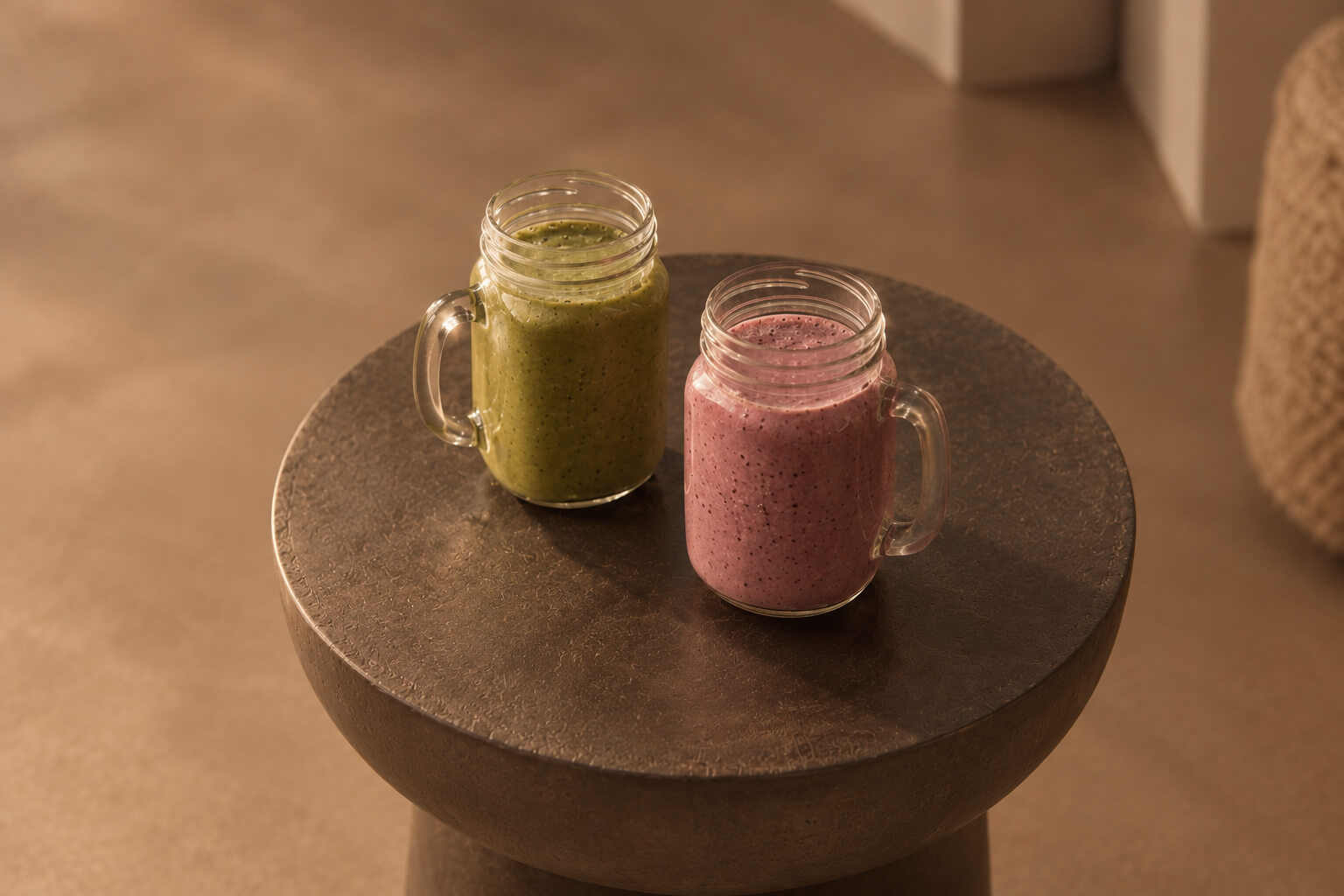
Many people associate green smoothies, protein smoothies or a smoothie diet with fewer calories, a better intake of nutrients and an easier start to losing weight.
It is not that simple, though. Losing weight with smoothies can work if the smoothie is sensibly put together and fits within a realistic calorie deficit. A smoothie on its own will not automatically make you slimmer. Depending on the recipe, it can be very high in calories, contain a lot of fructose or be less filling than a solid meal.
In this article, you will read when smoothies can help with weight loss, what to look out for in the ingredients and why a smoothie-only diet is usually not a sustainable solution. Want to lose weight in a structured way? A programme for medically supervised weight loss can help you align nutrition, daily routine and realistic goals.
What does losing weight with smoothies involve?
When losing weight with smoothies, you usually replace one or more snacks or meals with a blended drink. The aim is to lower your daily energy intake while still getting vitamins, minerals, dietary fibre and fluid.
The effect does not come from the smoothie itself, but from the overall balance. If a smoothie replaces a high-calorie meal and still keeps you full, it can help with weight loss. If you drink it on top of your normal meals, however, it can actually increase your calorie intake.
For weight loss, what matters is whether a suitable energy deficit develops over several days and weeks. This principle is more important than individual foods or trendy diets.
Are smoothies healthy for weight loss?
Healthy smoothies for weight loss can be a good way to add more fruit, vegetables or protein to your daily life. Homemade versions in particular have the advantage that you can better control the ingredients, portion size and number of calories.
However, a smoothie is not automatically healthy just because it contains fruit. Large amounts of banana, mango, grapes, fruit juice, honey, dates, nut butter or coconut milk can quickly increase the calorie content. Ready-made smoothies from the supermarket can also contain a lot of fruit purée, juice or added sugar, depending on the product.
The difference between a useful weight-loss smoothie and a liquid calorie bomb lies mainly in the ingredients. Vegetables, protein and fibre usually make a smoothie more filling than one made only from fruit.
Smoothie diet: why a diet of only smoothies can be problematic
A smoothie diet for weight loss often promises quick results. It involves replacing several meals a day with smoothies. In the short term, your weight may drop, especially if you take in far fewer calories as a result. However, this approach is often not sustainable.
Problems with a strict smoothie diet can include:
- too little protein, if there is no suitable protein source,
- too little chewing and therefore less satiety,
- severe restriction of normal meals,
- intense binge eating after the diet phase,
- no eating routine that fits your daily life,
- a risk of too low an energy intake with very one-sided plans.
A smoothie-only diet can therefore quickly turn into the classic diet pattern: a lot of restriction, short-term success and then a relapse into old habits. For long-term weight management, it is usually wiser to use smoothies in a targeted way rather than replacing all your meals with liquid food.
Why smoothies can be less filling than solid meals
Whether a smoothie keeps you full depends on the ingredients, the amount and how quickly you drink it. In everyday life, liquid or semi-liquid calories are often consumed faster than solid meals. As a result, a smoothie may provide calories but not keep you full as long as a meal with a similar amount of energy.
Solid food has to be chewed. This extends eating time and promotes a feeling of fullness. With a smoothie, this largely disappears. If you drink a large smoothie between meals, you may take in a lot of calories without really feeling full.
In practice, this means: drink smoothies slowly and mindfully. Use them as a planned meal or a planned snack, not as a casual drink alongside your meal.
Green smoothies for weight loss: what makes sense?
Green smoothies for weight loss usually consist of leafy greens, vegetables, some fruit and liquid. They can be useful if they increase your vegetable intake and do not consist mainly of sweet fruit or juice.
Suitable ingredients for green smoothies can include:
- spinach, lamb's lettuce, rocket or kale in moderate amounts,
- cucumber, celery or courgette for volume,
- berries, kiwi, apple or a small amount of banana for flavour,
- water, unsweetened tea or unsweetened plant-based milk as liquid,
- skyr, yoghurt, quark, protein powder or silken tofu as a protein source,
- flaxseed, chia seeds or oats for fibre.
If you make smoothies with a lot of fruit, you will get vitamins and phytonutrients, but often also a lot of sugar and little satiety. A balanced green smoothie should therefore not only taste sweet, but also contain protein and fibre.
What goes into a good smoothie for weight loss?
A good smoothie for weight loss is not juice with a creamy texture. Think of it more as a small meal. For that, it needs volume, protein, fibre and a suitable amount of calories.
| Building block | Suitable examples | Why it helps with weight loss |
|---|---|---|
| Vegetables | Spinach, cucumber, courgette, celery, kale | Adds volume and micronutrients, usually with few calories |
| Fruit in limited amounts | Berries, apple, kiwi, half a banana | Adds flavour, but should not make up the largest part |
| Protein source | Skyr, quark, yoghurt, protein powder, silken tofu | Supports satiety and the preservation of muscle mass |
| Fibre | Oats, flaxseed, chia seeds, psyllium husk | Can improve satiety and make the meal complete |
| Liquid | Water, unsweetened tea, unsweetened plant-based milk | Makes the smoothie drinkable without unnecessary sugar |
Protein in particular is important when losing weight, because it contributes to the feeling of fullness and can help preserve muscle mass.
What to look out for in smoothie recipes for weight loss
Do not choose smoothie recipes for weight loss on taste alone. The most important thing is whether the smoothie fits with the rest of your diet. A recipe with banana, mango, fruit juice, nut butter and honey can easily contain as many calories as a full meal.
When choosing recipes, pay particular attention to these points:
- Use whole fruit instead of fruit juice.
- Use very sweet fruits in smaller amounts.
- Always add a protein source if the smoothie replaces a meal.
- Avoid syrup, honey, sugar and sweetened plant-based milk.
- Drink the smoothie slowly and not alongside a full meal.
- Watch the portion size, especially with nuts, seeds and oats.
Smoothie or full meal: which is better?
For most people, smoothies are not a complete replacement for a balanced diet. They can be a practical addition if you are short on time in the morning, need a planned snack or find it hard to fit vegetables into your day otherwise.
A solid meal does have advantages, though: you have to chew it, it often keeps you full for longer and it is easier to make it a balanced meal. Especially with strong hunger, uncontrollable cravings or emotional eating, a solid meal can have a more stable effect than a liquid replacement.
Practical smoothie ideas for a calorie-conscious diet
The following ideas are not fixed diet plans, but examples of a balanced combination. Always adjust the amounts to your own energy needs.
- Green protein smoothie: spinach, cucumber, berries, skyr and water.
- Berry smoothie: berries, low-fat yoghurt, flaxseed and a little water.
- Oat smoothie: a small amount of oats, quark, berries and unsweetened plant-based milk.
- Vegetable smoothie: cucumber, celery, a little apple, lemon juice and yoghurt.
Vegetables in general can add volume, lower the energy density of a meal and promote a feeling of fullness.
When smoothies are less helpful for weight loss
Smoothies can get in the way of weight loss if they unnoticeably increase your calorie intake or if you use them for a short-term crash diet. Very sweet smoothies can also be unhelpful if they increase your appetite or do not adequately replace solid meals.
Be especially careful if:
- you drink smoothies alongside your normal meals,
- your smoothies consist mainly of fruit and juice,
- you quickly feel hungry again after the smoothie,
- you regularly replace meals with very low-calorie smoothies,
- you experience digestive complaints from large amounts of raw vegetables,
- you see smoothies as a quick fix rather than part of a nutrition plan.
Do you find exercise difficult? That does not mean weight loss is bound to fail. Everyday movement, nutrition and realistic routines also play an important role.
What to do if losing weight with smoothies is not working
If your weight is not dropping despite the smoothies, it is usually not down to one recipe. More often, the overall approach is not right. Perhaps your smoothies contain more calories than you think, are not filling enough or you drink them on top of your normal diet.
Want to lose weight without medication? A structured approach to losing weight without medication can be useful. If weight loss repeatedly does not work despite a good structure, or if you have severe overweight with related conditions, a doctor can assess whether weight loss medication is a medically appropriate option.
In that case, ask yourself these questions:
- Which ingredients and amounts are really in my smoothie?
- Does the smoothie replace a meal, or do I drink it on top?
- How long does the feeling of fullness last?
- Does the smoothie contain enough protein?
- Do I later experience binge eating or cravings for snacks?
- Does the smoothie fit within my actual calorie needs?
Not making progress despite a good approach? A medical eligibility check can help identify possible medical, hormonal or behavioural factors.
Frequently asked questions about losing weight with smoothies
Can you lose weight with smoothies?
Yes, losing weight with smoothies is possible if they fit within a calorie deficit. What matters is not the smoothie itself, but your total energy intake over the day.
Are green smoothies better for weight loss?
Green smoothies can be useful if they contain plenty of vegetables, some fruit, protein and fibre. However, they are not automatically low in calories or filling. The ingredients make the difference.
Is a smoothie diet a good idea?
A strict smoothie diet is usually not sustainable. It can save calories in the short term, but it does not replace a lasting change in your eating habits. Chewing, practicality in everyday life and fixed routines are often missing.
How many smoothies a day make sense?
That depends on your goal, the recipe and your energy needs. For many people, one planned smoothie as breakfast or a snack is more realistic than several smoothies a day. There is no fixed number that applies to everyone.
What should go into a smoothie for weight loss?
Vegetables, a limited amount of fruit, a protein source, fibre and a low-calorie liquid. Smoothies made only from fruit and juice are often less filling and can contain a lot of calories.
Are ready-made smoothies from the supermarket suitable?
Ready-made smoothies can be handy now and then, but check them carefully. Look at the portion size, sugar, proportion of fruit juice, protein content and calories. Homemade smoothies are usually easier to portion.
Conclusion: smoothies can help, but they do not replace a strategy
Smoothies for weight loss can be useful, provided you plan them consciously. Truly healthy smoothies for weight loss contain not only fruit, but also vegetables, protein and fibre. This makes them more filling and easier to fit within a calorie deficit.
A smoothie diet, on the other hand, is usually not a sustainable solution. If you want to lose weight in the long term, you need an eating pattern that works beyond individual recipes. Smoothies can be part of that, but they do not replace a realistic overall approach.
Smoothies work best when they fit your daily routine, your energy needs and your hunger levels. They can then help you plan meals more easily, eat more vegetables and be more mindful of calories.