What is sleep apnea?
In obstructive sleep apnea (OSA), your upper airways repeatedly collapse briefly during sleep. Your breathing then stops briefly or becomes very shallow. Your brain notices this, and you wake up for a fraction of a second to breathe again. Often you don't realize this yourself, but your sleep is constantly interrupted.
Severity is expressed in the apnea-hypopnea index (AHI): the number of breathing cessations or reductions per hour of sleep.
- 5 to 15 per hour: mild sleep apnea
- 15 to 30 per hour: moderate sleep apnea
- more than 30 per hour: severe sleep apnea
Symptoms of sleep apnea
- Loud and irregular snoring
- Breathing cessations noticed by your partner
- Waking up tired and being sleepy during the day
- Morning headaches
- Concentration problems
- Frequent urination at night
Do you recognize these symptoms? Discuss them with your GP. Sleep apnea is diagnosed with a sleep study.
Sleep apnea and overweight: what is the connection?
Overweight is one of the main risk factors for obstructive sleep apnea. Fat around your neck and in your abdomen (an 'pot belly') can narrow the airway and increase pressure on your lungs, making the airway more likely to collapse at night. Conversely, poor sleep can make it harder to lose weight, as fatigue affects your appetite and energy.
Therefore, weight loss can reduce sleep apnea. How much effect it has varies per person.
What to do about sleep apnea? A list of treatments
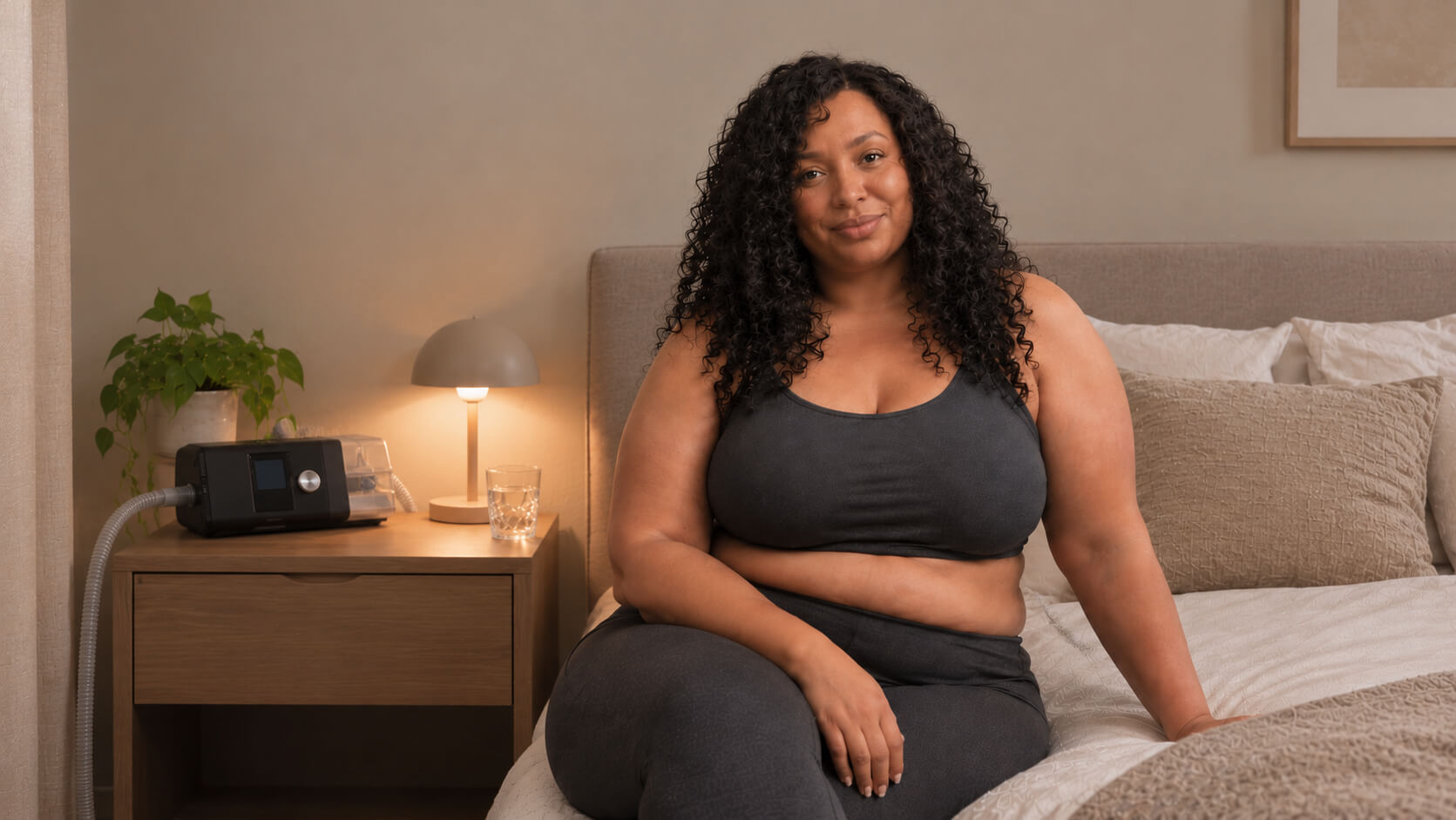
- CPAP: a device that blows air into your airways via a mask, keeping them open. This is often the standard treatment for moderate to severe sleep apnea.
- Mandibular Advancement Device (MAD): a brace that moves your lower jaw slightly forward.
- Positional Therapy: if you primarily have breathing cessations when sleeping on your back.
- Lifestyle: weight loss, reduced alcohol intake, quitting smoking, and a consistent sleep rhythm.
- Surgery: in a small number of cases.
Your doctor or sleep center will determine which treatment is right for you.
New sleep apnea treatment: what did the research with tirzepatide show?
In 2024, the results of the SURMOUNT-OSA studies were published in the New England Journal of Medicine. These studies investigated tirzepatide, the active ingredient in Mounjaro, in 469 adults with obesity and moderate to severe obstructive sleep apnea. The studies lasted 52 weeks.
- In the group without CPAP, the AHI decreased by an average of 25.3 breathing cessations per hour, compared to 5.3 in the placebo group.
- In the group using CPAP, the AHI decreased by 29.3 per hour, compared to 5.5 with placebo.
- Participants lost an average of about 18 to 20% of their body weight, compared to about 2% with placebo.
The effect on sleep apnea was primarily related to weight loss.
Is Mounjaro approved for sleep apnea?
In the United States, the FDA approved tirzepatide in December 2024 for moderate to severe obstructive sleep apnea in adults with obesity.
In Europe, the situation is different. The European Medicines Agency (EMA) did not add a separate indication for sleep apnea in December 2024. However, the research data on sleep apnea has been included in the product information. Mounjaro is registered in Europe for weight management in adults with obesity or overweight with associated health problems, and for type 2 diabetes. You can read about the approved indications for Mounjaro in the Mounjaro package leaflet. A doctor always determines whether medication is suitable for you.
Medication does not simply replace your CPAP
Are you using a CPAP device? Do not stop using it without consulting your doctor or sleep center. Even if you lose weight, it is important to have your sleep apnea reassessed before adjusting your treatment.
Want to read more about new developments? Also read our article Retatrutide and sleep apnea: what do the new studies show?.
Frequently Asked Questions
Can sleep apnea disappear if you lose weight?
For some people, symptoms significantly decrease or disappear. For others, sleep apnea persists, even after weight loss. Always have this re-evaluated.
Does Mounjaro help with sleep apnea?
In the SURMOUNT-OSA studies, the number of breathing cessations per hour significantly decreased in people with obesity using tirzepatide. In Europe, Mounjaro is not separately registered for sleep apnea.
Can I stop my CPAP if I lose weight?
Do not do this on your own. Always consult your doctor or sleep center. They can determine if your treatment can be adjusted with a new sleep study.
Does excess belly fat affect sleep apnea?
Yes. Abdominal fat and fat around your neck can obstruct your breathing at night and increase the risk of sleep apnea.